
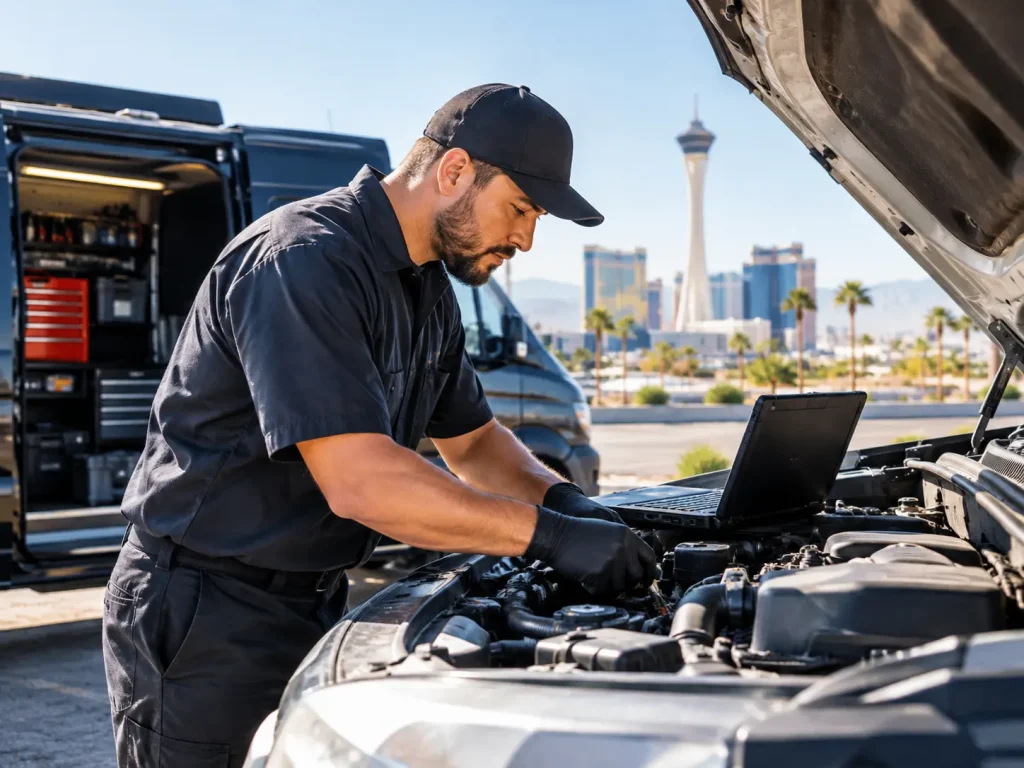
You are driving along when the engine suddenly stumbles. The car shudders at a stoplight, hesitates when you press the pedal, or the check engine light begins to flash. These are classic signs of an engine misfire, and while the word sounds technical, the idea is simple. One or more cylinders in your engine failed to burn their fuel properly. A misfire can be minor and occasional, or it can be a serious problem that damages expensive parts if you ignore it. This guide explains what an engine misfire is, the most common causes, how a misfire is diagnosed, and what repairs usually fix it. If you are dealing with an engine misfire in Omaha, it also explains how ignition coil repair and other fixes can often be handled by a mobile mechanic at your home or workplace.
What Is an Engine Misfire?
Your engine burns a mixture of air and fuel inside its cylinders. Each cylinder follows a repeating cycle, and at the right moment a spark ignites the mixture and pushes the piston down. A misfire happens when that process fails in one or more cylinders. The mixture does not ignite, ignites too weakly, or ignites at the wrong time. The engine loses power from that cylinder, runs unevenly, and may send unburned fuel into the exhaust. Three things have to come together for a clean burn: enough air and fuel in the right proportions, a strong spark at the right moment, and adequate compression in the cylinder. A failure in any one of them can cause a misfire.
Common Signs of a Misfire
- A rough, shaky, or uneven idle
- Hesitation, stumbling, or jerking when you accelerate
- A noticeable loss of power, especially going uphill or passing
- A check engine light that is steady or flashing
- Poor fuel economy that has gotten worse
- A strong smell of gasoline or a rotten egg odor from the exhaust
- Popping or sputtering sounds from the engine or exhaust
- Difficulty starting, or stalling at low speeds
- Vibration that you can feel through the steering wheel or seat
The symptoms can be subtle at first. Many drivers notice a slight roughness for weeks before the problem becomes obvious, so it pays to pay attention to small changes.
The Most Common Cause: Worn Spark Plugs
Spark plugs create the spark that ignites the fuel. Over time, the electrodes wear down, and deposits build up on the tip. A worn plug produces a weaker spark, which makes misfires more likely, especially under load. Spark plug life varies a great deal by plug type and vehicle, so your owner’s manual lists the recommended replacement interval. A plug that is oily, fouled, cracked, or has a wide gap points to a problem that should be looked at, and it can also hint at other issues in the engine. Replacing worn spark plugs is among the most common and effective misfire repairs.
Ignition Coil Problems
The ignition coil takes the low voltage from the electrical system and boosts it into the high voltage needed to jump the gap at the spark plug. Many modern engines have one coil for each cylinder, mounted directly on top of the plug. When a coil starts to fail, it may produce a weak spark or none at all, leading to a misfire in that cylinder. Heat, vibration, age, and worn spark plugs that force the coil to work harder can all shorten a coil’s life. Signs include a misfire that comes and goes, one cylinder that repeatedly misfires, and trouble that gets worse when the engine is hot or under load. Ignition coil repair usually means testing the coil and replacing it if it fails, and a technician often checks the spark plug at the same time.
Worn Plug Wires and Ignition Parts
Some vehicles use spark plug wires or boots to carry the high voltage to the plugs. Cracked, worn, or damp wires can leak voltage and weaken the spark. Other ignition components, such as distributors in older vehicles, can also wear out. A technician can inspect these parts for damage and test them as part of a diagnosis.
Fuel Delivery Problems
If a cylinder does not get the right amount of fuel, it cannot burn properly. Fuel related causes include:
- A clogged or dirty fuel injector that delivers too little fuel or a poor spray pattern
- A leaking injector that delivers too much
- A weak fuel pump or a clogged fuel filter that reduces pressure
- A faulty fuel pressure regulator
- Contaminated or poor quality fuel, including water in the fuel
Fuel problems often affect several cylinders at once and may be worse under load or at certain speeds. Using the fuel grade your owner’s manual recommends, and keeping up with fuel system maintenance, helps prevent them.
Air and Vacuum Leaks
Engines are tuned to run on a precise amount of air. A leak in the intake system, a cracked vacuum hose, a bad gasket, or a dirty or failing mass airflow sensor can let in air the computer does not know about. That creates a lean mixture, which does not burn well and can cause misfires, a rough idle, and a hissing sound from the engine bay. A dirty air filter or throttle body can also upset the balance. Our article on preparing your car for Nebraska’s unpredictable weather swings explains how temperature changes stress rubber hoses, gaskets, and electrical parts, which is one reason leaks and ignition trouble can appear when the weather shifts.
Sensor and Computer Issues
The engine computer relies on sensors to decide how much fuel to deliver and when to fire the spark. A failing crankshaft or camshaft position sensor, an oxygen sensor, a coolant temperature sensor, or an airflow sensor can feed it bad information, leading to poor combustion and misfires. These problems often come with stored trouble codes, which makes a scan an important first step.
Mechanical Causes
Less often, a misfire comes from a problem inside the engine itself. Possible causes include low compression from worn piston rings or damaged valves, a leaking head gasket, a burnt or bent valve, a worn camshaft, or incorrect valve timing. Mechanical causes tend to be more serious and more involved to repair, and they are usually identified through testing, such as a compression test, after simpler causes are ruled out.
Carbon Buildup and Engine Deposits
Over time, carbon deposits can build up on valves, in the combustion chamber, and on injectors. In some engines, particularly certain direct injection designs, this buildup can affect how the engine breathes and burns fuel. It may be one factor behind a rough idle or misfire, and a technician can tell you whether it is likely to be involved.
What Does a Flashing Check Engine Light Mean?
A steady check engine light means the computer has stored a fault and wants attention. A flashing light is more urgent. It usually signals an active misfire serious enough to send unburned fuel into the exhaust, where it can overheat and damage the catalytic converter, one of the more expensive parts of the exhaust system. If your light is flashing, reduce your speed and load, avoid hard acceleration, and have the car checked as soon as you can. If the car is shaking badly, losing power, or giving off a strong smell, pull over somewhere safe and call for help. Your owner’s manual explains how your vehicle displays warnings.
How Is a Misfire Diagnosed?
A good diagnosis follows a logical path instead of guessing at parts:
- Ask when the misfire happens, such as at idle, under load, when cold, or when hot
- Scan the computer for trouble codes, which often identify whether the misfire is on one cylinder or several
- Review live data and misfire counts for each cylinder
- Inspect the spark plugs for wear, deposits, or damage
- Test the ignition coils and check the wires and boots
- Check fuel pressure and test the injectors
- Look for vacuum leaks and inspect hoses and intake parts
- Test the sensors that influence fuel and spark
- Perform compression or leak down tests if the simpler causes are ruled out
A code that points to a particular cylinder is a starting point, not the final answer. For example, a misfire on one cylinder may come from the plug, the coil, the injector, or a mechanical problem, and the technician works through the possibilities to find the real cause.
What Repairs Usually Fix a Misfire?
The right repair depends on the cause. Common fixes include replacing spark plugs, replacing one or more ignition coils, replacing worn wires or boots, cleaning or replacing fuel injectors, replacing a fuel filter or pump, repairing vacuum leaks, cleaning airflow sensors and throttle bodies, and replacing faulty sensors. Because a worn plug can strain a coil, technicians often replace plugs and any failing coils together. Mechanical repairs, such as those for a head gasket or valves, are larger jobs. Fixing the real cause matters, because replacing a coil on a cylinder that has a fuel or compression problem will not cure the misfire.
Can I Keep Driving With a Misfire?
It is not a good idea to drive for long. A mild, occasional misfire may let you reach a safe place or a technician, but continuing to drive can damage the catalytic converter, foul the spark plugs, and make the underlying problem worse. A flashing check engine light, heavy shaking, or a major loss of power is a signal to stop driving and get help. If the car will not start or stalls, our guide to the top 10 reasons your car won’t start and how to get back on the road covers the other common causes of starting trouble.
How to Help Prevent Misfires
- Replace spark plugs at the interval listed in your owner’s manual
- Do not ignore a rough idle or a check engine light
- Replace the air filter and fuel filter when they are due
- Use the fuel grade your owner’s manual recommends, and avoid questionable fuel
- Keep up with oil changes, since oil leaks into spark plug wells can damage coils and plugs
- Fix leaks and cracked hoses promptly
- Keep the engine bay reasonably clean and dry
- Have the engine checked at the first sign of hesitation or stumbling
Can a Mobile Mechanic Fix an Engine Misfire?
In many cases, yes. A mobile mechanic can come to your home or workplace in the Omaha area, scan for codes, read live data, inspect and test the spark plugs and ignition coils, check for vacuum and fuel problems, and complete many common repairs on site, including spark plug replacement and ignition coil repair. That means you do not have to drive a misfiring car to a shop. Some problems, such as internal engine damage, major timing issues, or repairs that need a lift or specialized equipment, may need a full shop, and a trustworthy technician will tell you honestly when that is the case. When you book, share your vehicle’s year, make, model, and mileage, tell them whether the check engine light is steady or flashing, and describe when the misfire happens.
Do Not Wait for the Light to Flash
A misfire rarely fixes itself, and waiting usually makes the repair bigger. A rough idle, a hesitation, or a dip in fuel economy is the early warning. Catching it at that stage often means a simple fix, such as plugs or a coil, instead of a much larger repair later.
To learn more about our services, visit our homepage. If your engine is misfiring, reach out through our contact us page and we will come to you anywhere in the Omaha area.