
Ask anyone who has lived in Omaha for a full year, and they will tell you the same thing about Nebraska weather, it does not ease between seasons the way it might elsewhere. A seventy five degree afternoon in March can be followed by a hard freeze forty eight hours later. A calm summer evening can turn into a severe thunderstorm with damaging hail within the span of an hour. This kind of rapid, dramatic swing is simply part of living on the Great Plains, and it places a genuinely different kind of stress on a vehicle’s battery, tires, and cooling system than a more gradual, predictable climate would.
Why Omaha’s Weather Changes So Quickly
Nebraska sits in a part of the country where cold fronts from the north and warm, moist air from the Gulf regularly collide, and this collision is exactly what produces the region’s famously fast moving weather systems. A strong cold front can drop temperatures by thirty or forty degrees within a matter of hours, and the same atmospheric setup that creates this kind of temperature swing is also responsible for the severe thunderstorms and hail events that Omaha experiences with some regularity during spring and summer. Unlike a climate where weather changes gradually over days, Omaha’s swings often happen within a single afternoon, giving a vehicle very little time to adjust between one set of demands and another.
How Rapid Swings Affect Your Battery
Batteries respond to temperature extremes in opposite ways depending on the direction of the swing, and Omaha’s rapid transitions mean a battery can face both kinds of stress within the same week. Heat accelerates the internal chemical breakdown that shortens battery life, while cold reduces the battery’s ability to deliver power for starting. A battery that seems to perform adequately through a warm stretch can reveal accumulated heat damage the moment a sudden cold front drops temperatures sharply, since the reduced cranking power that comes with cold exposes weaknesses that summer heat had already created but not yet fully revealed.
This rapid back and forth is harder on a battery than a climate that settles into one consistent extreme for an entire season, since Omaha batteries essentially face compressed versions of both summer and winter stress within the same general timeframe rather than getting a true recovery period between the two.
Why Sudden Storms Test Your Tires Differently
A sudden severe thunderstorm can turn dry pavement into standing water within minutes, and Omaha drivers frequently have little warning before conditions shift from a normal dry commute to a genuine downpour with reduced visibility and hydroplaning risk. Adequate tread depth matters considerably more in this kind of rapid onset weather than it would in a climate with more gradual, predictable rain buildup, since there is often less time to adjust driving behavior before conditions become genuinely hazardous.
Hail events add another consideration specific to this region, since a significant hailstorm can affect tire sidewalls in addition to the more commonly discussed body panel damage. Checking tires after any severe hail event, alongside the usual visual inspection for dents, is worth adding to a post storm routine here.
Why Your Cooling System Faces Its Own Version Of This Challenge
Rapid temperature swings put a different kind of stress on a cooling system than steady heat or steady cold would. A cooling system that has been running efficiently during a mild stretch may not reveal a developing weakness, like a slow coolant leak or an aging hose, until a sudden heat spike pushes the system to work harder than it has in weeks. Checking coolant levels and hose condition periodically throughout the year, rather than only once during a fixed seasonal check, helps catch these issues before one of Omaha’s sudden hot stretches exposes them during a demanding drive.
Signs Your Vehicle Is Struggling With These Swings
A battery that cranks noticeably slower right after a sudden cold snap, tire pressure warnings that seem to coincide with rapid temperature drops, or a cooling system that runs hotter than expected during the first genuinely hot day after a mild stretch are all worth checking. If you have experienced a starting failure that seemed to come out of nowhere, our guide on the top 10 reasons your car won’t start and how to get back on the road covers a range of causes, several of which are more likely to surface once Nebraska’s rapid weather swings have already put a strain on a marginal component.
Simple Habits That Help Omaha Drivers Stay Ahead
Testing battery health at least once each year, ideally before the season’s first serious cold snap, gives you a much clearer picture than assuming a battery is fine simply because it started the car that morning. Checking tire pressure regularly, since Omaha’s temperature swings affect pressure more dramatically than a steadier climate would, and inspecting your cooling system periodically rather than only during a single annual checkup, both help you stay ahead of a system quietly weakening rather than reacting only after a failure.
Keeping a basic emergency kit in your vehicle during severe weather season, including items like a flashlight, a phone charger, and a blanket, is also worth considering given how quickly a Nebraska storm can create conditions serious enough to leave a driver waiting on the roadside for a longer stretch than expected. This is a small, low effort habit that provides real peace of mind given how suddenly conditions here can shift from routine to genuinely severe.
Why A Mobile Mechanic Fits Omaha’s Weather Reality
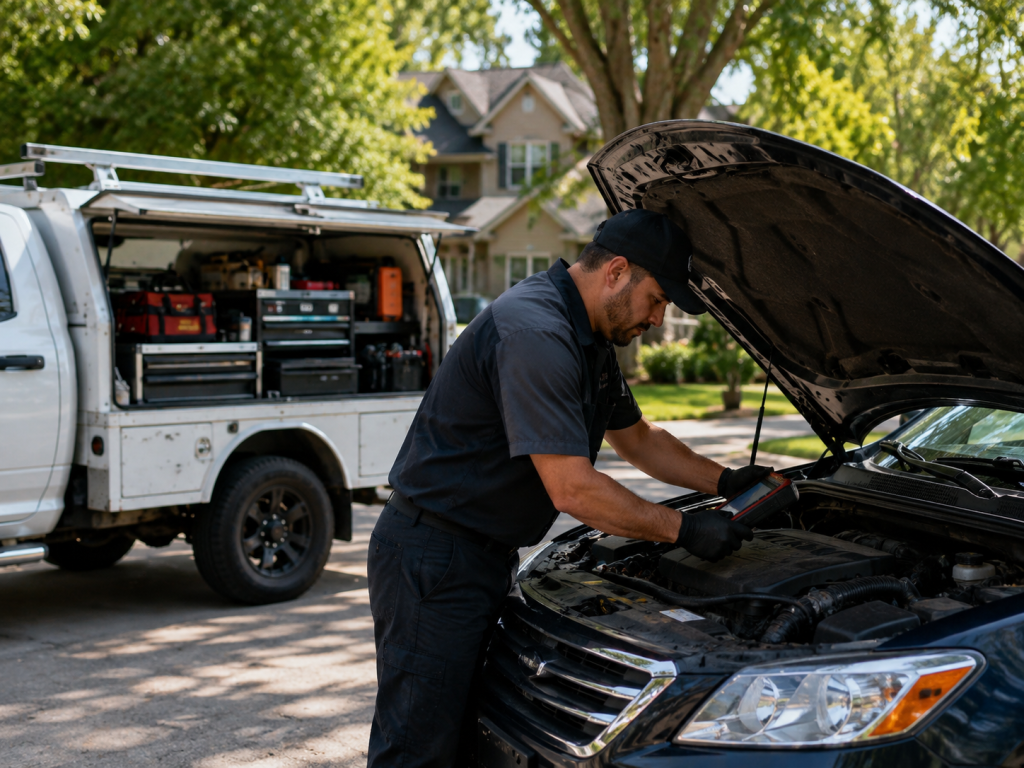
Given how quickly Omaha’s weather can shift from manageable to severe, having a technician check your vehicle’s readiness before conditions change is often more practical than waiting for a scheduled shop appointment that might not align with an approaching front. A mobile mechanic can come to your home or workplace, test your battery, check your tires, and inspect your cooling system without requiring you to navigate deteriorating conditions to reach a shop.
We covered the broader advantages of this approach in our article on why mobile mechanics are better than traditional auto shops in Omaha, which explains how convenience and quick response times come together, particularly valuable during a season when Nebraska weather can turn with very little warning.
Stay Ahead Of Nebraska’s Next Weather Swing
Omaha’s rapid shifts between heat, cold, and severe storms are simply part of life here, and while they cannot be predicted with much advance notice, staying ahead of how they affect your battery, tires, and cooling system is well within your control. Testing these systems proactively rather than waiting for a sudden swing to expose a weakness is one of the most effective ways to keep your car reliable through another unpredictable Nebraska year, no matter which direction the next front happens to push the temperature.
If it has been a while since your vehicle had a proper checkup, visit our homepage to learn more about our services, or reach out through our contact us page to schedule a visit at your home or office anywhere in the Omaha area.
A little proactive attention now can help your car hold up against whatever Nebraska’s next sudden weather swing decides to bring.